Hot & Fast BBQ Beef Brisket
Here is the process I used to cook a "hot & fast" barbequed beef brisket. Brisket is generally more than a little initimidating for those that have never cooked one. I know that was the case for me back in the day. For those uninitiated, the brisket is a very tough cut found on the chest of the animal , between and behind the front legs (foreshank). Cattle walk a lot, so the front legs get a good workout. After one look at a brisket you will see that it looks like a cow's odometer.
Instructions
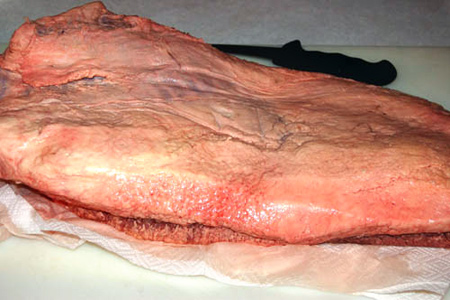
Remove the brisket from the cryovac bag, rinse well with cold water and pat dry. Put it on the cutting board fat-side-up on a double layer of paper towels. This brisket was 15 ½ pounds in the bag. I like to use a 6-inch flexible boning knife for trimming. You'll see why as we progress through the process.
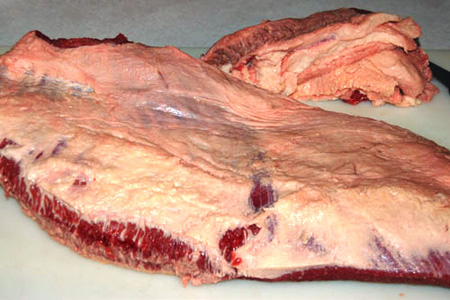
The first order of business in trimming is to shave the fat layer down to a reasonable thickness. Seasoning and smoke can't penetrate fat. However, it will act as an insulation layer to protect the meat when we cook it. I try to get it to about ¼-inch, but you can see it's an inexact science.
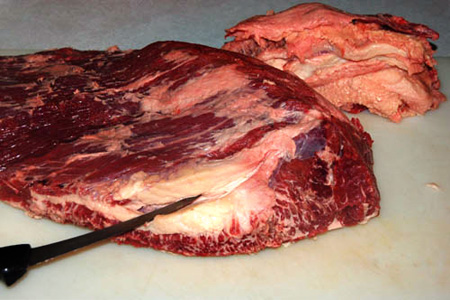
Flip the brisket over and you'll notice two pockets or “kernels” of hard fat. These separate the flat and point muscles. Fat equals flavor and tenderness, but we don't need it all. Cut about ¾ of the fat out of the smaller kernel where you see the knife point.
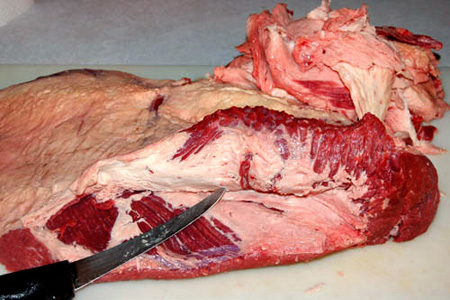
Turn the brisket around and repeat the same trimming process for the large kernel. I like to make a long horizontal cut through the fat then make two long deep angular cuts from each outside edge toward the first cut. You can see this where the knife is pointing. I was a little over-aggressive in my trimming.
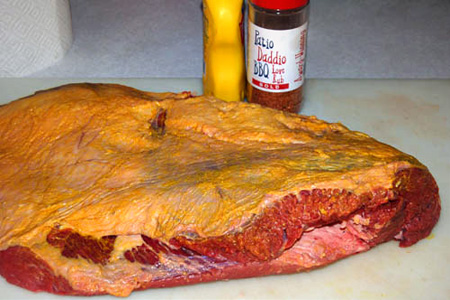
You can see from the pile of trimmings in the background of the picture above that I removed about 1 ½ pounds. In my experience, that's pretty typical. Now we need to smear a thin layer of mustard on all of the outer surfaces (edges too) and inside each fat kernel pocket. This will help the seasoning adhere.
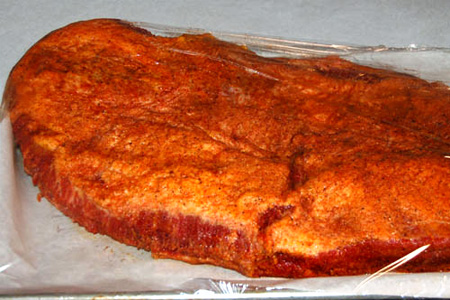
Season the entire surface and fat kernel pockets liberally with your seasoning. You don't need to rub it into the meat, but I pat it when I'm done to make sure it all sticks. Put the brisket on parchment paper in a large a sheet pan, cover with plastic wrap, and refrigerate overnight, or at least several hours.
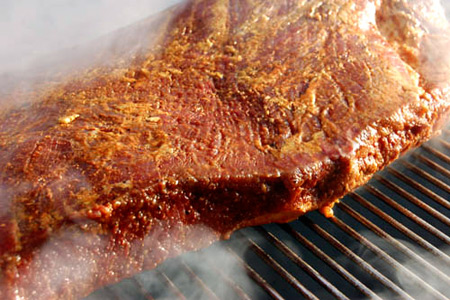
Start your fire and prepare for indirect cooking at medium-high heat. I recommend a mixture of cherry and hickory chunks or chips for smoke. Cook fat-side-down at 325-350º until the thickest part of the flat reaches 190º. Mine (about 14 pounds trimmed) took 5 hours at an average of 350º.
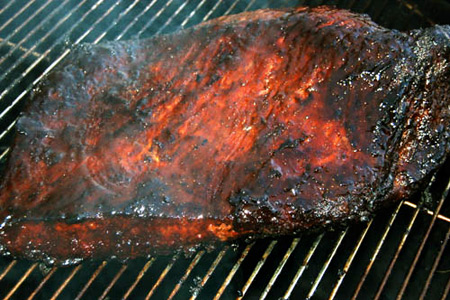
At 190º we're ready to apply the finishing glaze. I use a mixture of ½ cup golden brown sugar, ½ cup beef broth, ¼ cup ketchup, 1 Tbsp Worcestershire, and 1 tsp black pepper. Spoon and spread this (with the back of the spoon) on all sides and dust with the BBQ seasoning. Cook 30 more minutes and repeat.
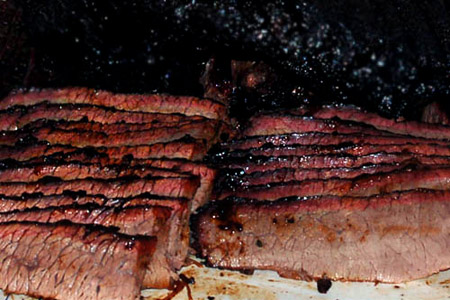
Continue cooking until the thickest part of the flat reaches 200º. Remove from the cooker, wrap in a double layer of heavy-duty foil and let rest 30 minutes (or longer wrapped in towels). Unwrap, separate the flat and point (it's easy), slice across the grain about ¼" thick, serve and enjoy.
Notes:
The entire cook took exactly 6 hours in my homemade drum cooker (UDS), but your mileage may (and almost certainly will) vary.
I used the for this cook. It's the first time that I've had a chance to use them.
Referenced in ingredients: BBQ seasoning